Wednesday, March 20, 2013

Can a machine decide if you can speak Spanish?

Recently, I've been learning from families that have young children trying to learn Spanish that certain automated programs (I mention no names!) that guide you through Spanish lessons may not be all that user-friendly or effective. Here's the deal... you use a computer microphone to submit speech. The program then tells you whether you are saying it "right" or not. I do not yet have first-hand experience with this program, but my understanding is that it either won't let you pass on to the next lesson, or it is discouraging to the child in some other way. I think this is one area where technology just cannot out-do a human. To put this into perspective, think about people you have encountered who are learning English. They may struggle through the language, and you may struggle to understand, even have to ask them to repeat a time or two. But if each syllable is not pronounced correctly, would you throw a hand up to stop them, stating that they are not doing it right? I mean, what is the goal here? For those formally studying the language for work or school, perfection might be the objective. But for most people, they just want to be able to understand and be understood in the target language.

 At Croghan Language Academy, there is a real person behind the computer (who happens to have a Bachelor's in Education and a Master's in Spanish), receiving your oral submissions and returning uplifting and encouraging feedback. Mistakes are used as learning experiences, not road blocks!


Tuesday, March 12, 2013

Raffle! (Ends March 27)


It's time for another raffle giveaway from Croghan Language Academy!  This is a Facebook Raffle only.


Would you like the opportunity to try out a session of Croghan Language Academy's online Young Amigos class completely for free???  Check this out!

Up for giveaway...  100% paid tuition for the next 10-week session of K-6 online Young Amigos, beginning April 15, 2013, for one family!  The class is also appropriate for almost-kindergartners.  It is the Asynchronous offering (no scheduled live class meetings) up for giveaway.

DISCLAIMER:  This raffle is for new-to-Croghan Language Academy families only.


Croghan Language Academy is a new venture for Krista that started in 2012.  She has many years of experience with Spanish and teaching of all ages (both online and bricks & mortar).  She is a current member of ACTFL (American Council on the Teaching of Foreign Languages) and is excited to be an exhibitor at Great Homeschool Conventions Cincinnati April 4-6 and Teach Them Dilligently in Omaha, May 30 - June 1.  Look for the Croghan Language Academy booth if you plan to attend either of these conventions.

 Learn more about Krista.


This Giveaway for one K-6 online Spanish class is open now and ends March 27 at 12:00 a.m. (just in time for me to get your course materials out to you for class!)

Click to enter: Facebook raffle

Happy Raffling!!!

Giveaway Day

Thursday, February 28, 2013

Learning to listen to Spanish


This post is primarily for adults learning Spanish, for example in my college-level courses.  The most popular inquiry is regarding how to hear, and more importantly understand, the Spanish language.  So please read the following strategies and ideas about how improve your listening skills.    

1.  First thing is first, get over the notion that you need to understand every word.  It's just not realistic.  It won't happen.  But instead, listen to get the gist and then use educated guessing to fill in the blanks.  If you have comprehension questions to answer, know those when you're watching, and listen just to find out the answer and forget the rest.
2.  In that process, you will need to repeat audio/video playing several times...  maybe even 50 times or more!  Use the pause button judiciously, then rewind immediately, until you do your very best to get it.  It is good ear-training.
3.  Are you using earphones?  If not, I highly recommend them.  Having the sound closer to your ear is helpful.
4.  Write down what you DO understand.  Leave blanks where you DON'T understand.  Then, see if you can figure it out.  Seeing it written down can be helpful.  
5.  If you hear a word that you don't understand, see if you can spell it out.  Type it into Google Translate, and see if it gives you anything that might be appropriate to context.  
6.  Be patient with yourself.  It is easy to get frustrated, but frustration does you no good.  Take a break from it, walk away.  Come back later when your brain is fresh.  This may do the trick!

Here are some idea for more organic forms of practice:

1.  Watch a movie, but set the language to Spanish.  If it is a movie you know well in English, you will find you can learn the Spanish you are hearing due to your pre-established knowledge.
2.  Listen to music in Spanish.  Find Spanish songs and then Google the lyrics so you can read along as you play the song.  Then take this song with you on your MP3 player, in your car, wherever you can listen to it.  Like #2 above, repetition will help you learn the language.  It's how we learned as babies... by listening over and over before we attempted to say a word for ourselves.
3.  Check out the podcast News in Slow Spanish.


Saturday, February 23, 2013

Talking point #1: Latinos are not falling into the U.S. melting pot


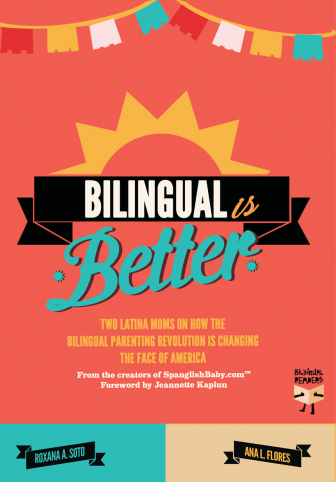
In preparation for a presentation I will be doing about the importance of learning Spanish in this country, I read Bilingual is Better by Ana L. Flores and Roxana A. Soto.  This book has a lot of great points, but one that stands out to me is the notion of Hispanic cultural sustainability.  They quote an April 2012 Nielsen report, saying "Hispanics are the largest immigrant group to exhibit significant culture sustainability and are not disappearing into the American melting pot" (Flores and Soto, 50)  That was a real Oprah "ah-ha" moment for me.  I had to think about this.  So the Hispanics in the U.S. don't fold in and acculturate into American society?  They are not just naturally going to blend into our Proverbial melting pot?  That is what other immigrant populations have done over time.  It's called acculturation, which Merriam-Webster defines as "cultural modification of an individual, group, or people by adapting to or borrowing traits from another culture; also : a merging of cultures as a result of prolonged contact"

Isn't this the way it goes in the U.S.:  Introduction of a new cultural community --> Fear, confusion and insecurity --> Reluctance to tolerate -->  Gradual tolerance --> Eventual acceptance AND/OR acculturation  --> Two cultures eventually becoming one --> Birth of new cultural community.  

What they are saying is that Hispanics are maintaining their cultural identity, their traditions and customs, their language.  They are not losing their culture.  Yes, when two cultures unite, some acculturation is going to happen.  But for the most part, Hispanic traditions (i.e. Spanish language!) are not being lost along the way.  Think about the number of Spanish words that are now recognized in the English language.  Flores and Soto offer the following as examples:  "taco, macho, burrito, fiesta, amigo, cilantro, poncho, barrio, piñata, siesta, coyote, hombre, co-jones, tortilla, rodeo, salsa, cabana, guerrilla, loco, sombrero, patio" (Flores and Soto, 51).  Some of those words are so commonplace English, that you may not have even realized it is a Spanish word!

I think of my hometown Grand Island, Nebraska (population roughly 50,000).  It was established by Germans.  But to find someone who speaks German there today is a real rarity.  There are no German print magazines or newspapers, nor is there even one German food restaurant.  All that I can think of are the two local halls:  The Liederkranz (this supposedly was the "high German club") and the Platt Duetsche (apparently the "low German club").  Those buildings are the most prominent traces of a once-thriving German culture.  The German culture of my hometown is considered a part of the history, not it's present, and certainly not it's future.

Spanish is different.  We see it everywhere.  If Latino culture is here to stay, then so is the Spanish language.  It's not going away!


Flores, A., & Soto, R. (2012). Bilingual is better. (1st ed.). Bilingual Readers.

Merriam-webster online dictionary. (n.d.). Retrieved from http://www.merriam-webster.com/dictionary/acculturation

(2012). State of the hispanic consumer: the hispanic market imperative. (Quarter 2), Retrieved from http://nielsen.com//content/dam/corporate/us/en/reports-downloads/2012-Reports/State-of-the-Hispanic-Consumer.pdf

Thursday, January 31, 2013

Inflation


The next session of Young Amigos starts April 15!  There is an early registration discount of 15% if you commit to the class at least 60 days before it starts.  That happens to be February 14.  So… ¡Feliz Día de San Valentín!  My Valentine's Day gift to you!

My tuition prices did increase with the start of the new year, so I wanted to offer some assistance for those who register early.  I did so begrudgingly.  I'm a softy, a teacher, not really a businesswoman.  It was brought to my attention that once I pay for the online resource center access, the workbooks, the cost of shipping and handling, etc. for each family that I’m actually under market, and not really earning that much.
  
Another thing, the pricing from 2012 reflected a different model.  I did not interact, check in or provide personalized feedback.  I developed that model against my own beliefs about quality education.  As the session was running, I couldn't have felt any less attached to the families taking my courses.  I spent December revamping my model so that I have relationships with the families taking my classes, or at least offer relationships.  I followed my heart on this one.  I also feel this differentiates me from my competitors.  For example, Rosetta Stone (impressive program, by the way!) won't ask how things are going, offer unique solutions to issues, send personalized videos or hand out stars for a job well done!  They won't remind you that you forgot to do an item during the previous week, or update you when everything is back on track.  I don't have the impressive technology that some of the others do.  I am simply a caring human being; a qualified, certified instructor, teaching your family Spanish from afar.  And it means a lot to me!

Tuition information can be found here:  http://croghanlanguageacademy.webs.com/tuition    Some explanation might be appreciated:

Synchronous = There is a weekly 45-minute live meeting  
Asynchronous = There are no live meetings to attend, all work is completed on your own time.  

If you are currently taking my Asynchronous class and feel like you’re just not getting enough structure, enough instruction, enough feedback, etc. perhaps consider the Synchronous offering.  In my honest opinion, I feel that the blend of some work on your own and some done with me is ideal.

Questions?  Email croghanlanguageacademy@gmail.com!

Saturday, January 19, 2013

College students: How to get started


Your questions about where to go, how to begin, where to start... I will attempt to answer all of that here, providing a road map to get on the right path in your Spanish class.

In all cases, the syllabus is where you need to start. It is displayed prominently in your course, but if you can't locate it, post a question in the discussion forum. Read it at the start of class and refer to it often.
  1. I then would make sure you have accessed the assignment due dates sheet, or course calendar and get those into your own personal calendar. They will not change (unless I have made an error, in which case I would send out an announcement).
  2. If your course includes the purchase of passcodes to an online homework site, you will want to get that purchased and register there ASAP. You get your code(s) through the purchase of your texbook (so don't throw away ANY of the packaging until your code(s) are accounted for and you've enrolled in the site).
  3. From there, I would then spend some time getting to know the all aspects of the course. Do not try to pass up this self-orientation time, and do not rush the experience. 
  4. Once you have spent some time orientating to the course, you should go ahead and begin learning your first lesson. You naturally may feel hesitant or doubtful as you begin. I would be glad to check on something for you to confirm completion. Just send me a note about it.
  5. Each lesson in all of my classes will work the same as the first.  I think consistency and routine is important, so for the most part, Lesson 2 should get easier, just because it works the same as Lesson 1! 
If, after following all 6 steps, you still have questions or feel lost in some aspect, please let me know!

Monday, January 14, 2013

Send me photos of my students learning Spanish!


If you are a Young Amigos student that purchased a January course before the end of December, you should have received a t-shirt for each student as a token of my thanks for early registration!  If you registered after January, I am selling these (children through adult sizes), so let me know if you are interested!

If you are a Descubre student, you can also buy a t-shirt and this blog pertains to you as well...

I would like to ask a favor.  I don't have any photos of students working on my courses.  Being an online class, that's a little hard, if not impossible.  But I would LOVE it if you would shoot some shots and either email them to me, post them on www.facebook.com/CroghanLanguageAcademy or on our Edmodo social class site.  Students wearing their Croghan Language Academy shirts in these photos, even if they are too big :), would be the icing on the cake for me!

It is also an option to only share them with me, with the promise that I will not share them with anybody else.  I completely understand that you may not want to make them public, but I would still like to see them, regardless.  But if it doesn't bother you, I'd REALLY appreciate it as I'm trying to bring in more students, and I think pictures of students in action will help.  See permission slips below...


For now, I can only borrow pictures from the internet, but these just don't mean a thing to me.  :(      (:


-----------------------------------------------------------------------------

If sharing photos, please copy and paste the following, and mark the appropriate categories.  In all instances of sharing, no names (first or last) nor locations will be mentioned.

___  I grant permission to use the photo(s) of my child(ren) for the CLA website.
___  I grant permission to use the photo(s) of my child(ren) for the CLA Facebook page.
___  I grant permission to use the photo(s) of my child(ren) for the Bilingual Babble Blog.
___  I am sending photos for Krista to view only, but do not share in any other way.